Directed by Howard Hawks
Written by Ben Hecht and Charles MacArthur
Starring:
- John Barrymore as Oscar Jaffe
- Carole Lombard as Lily Garland (formerly Mildred Plotka)
- Walter Connolly as Oliver Webb
- Roscoe Karns as Owen O’Malley
- Ralph Forbes as George Smith
Release Date: May 3, 1934
Rating: 
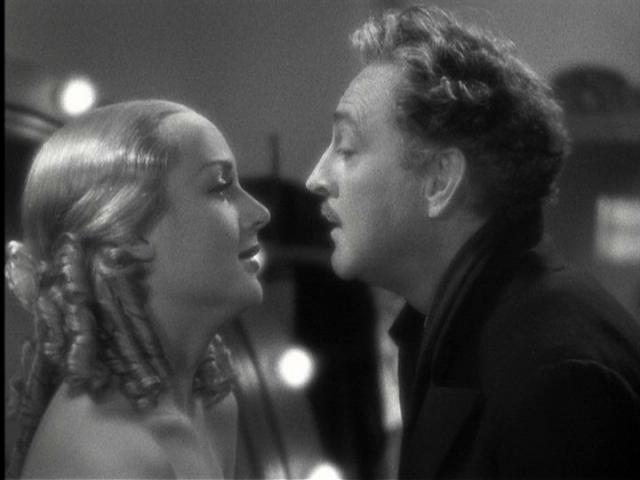
Howard Hawks’ deranged 1934 comedy dives headlong into the hysteria of show business and the colossal vanity of its theatrical royalty. Arriving just two months before the puritanical crackdown of the Hays Code tightened its grip on Hollywood, this feverish pre-Code farce charts the corrosive relationship between a domineering impresario and the tempestuous stage goddess he personally sculpted into fame. While it may not look like the most typically Hawksian entry in the protean career of Howard Hawks, its manic comic electricity still echoes the daring of his most adventurous films. At heart it’s a character showcase directed by a filmmaker who trusts performers above all else; the relaxed staging and almost indifferent décor remain pushed to the sidelines so the actors become the true narrative engine. In Hawksian terms, even with minimal stylistic fireworks, the classical craftsmanship remains as sharp and distinctive as in his most celebrated screwball escapades. Drawing from the gleefully theatrical script by Ben Hecht and Charles MacArthur, Hawks unleashes a carnival of flamboyant performances. John Barrymore dominates the screen as the volcanic impresario Oscar Jaffe, while Carole Lombard sparkles as the dazzlingly mercurial Lily Garland.
The funniest thing about this irresistible duo—two human firecrackers of volcanic shrieks—is how eerily alike they are on the surface. Their egos swell so magnificently that resolving their romantic and professional disasters feels practically impossible. Like every good satirical battle of the sexes, masculinity carries its codes while femininity guards its own rules, and the friction between those temperaments fuels the performances, generating scenes that trigger explosive laughter thanks to the authenticity of their combative personalities and their deliriously exaggerated gestures. The film slyly layers its comedy with referential surprises that extend beyond individual performances and into the media through which these characters operate. The rambunctious narrative becomes a grotesque portrait of the narcissism that defines the superstar lifestyle. Yet the film never sharpens its satire into cruelty; it stays breezily amusing, more gracefully self-aware than aggressively critical. As mentioned before, the satire does not stop with the characters but expands to the environment that molds them and the solipsism that envelops them. Theater becomes caricature while cinema is simultaneously lampooned. In a neat twist of irony, Jaffe dismisses film with contempt while the exaggerated theatricality of the mise-en-scène gleefully mocks the stage and all its eccentric habits.
Every allusive touch is there to lock the film into thematic harmony. At its core it plays like a blueprint for the screwball comedy, laying down many of the structural tricks that would dominate the genre throughout the 1930s. The eccentricities embodied by the characters anticipate the chaotic personalities that later flooded the form, yet none reach the spectacular lunacy of Jaffe and Lily. John Barrymore unleashes a hyper-gestural performance of outrageous intensity—a storm of vampiric gestures delivered with wild, almost schizophrenic ferocity. Opposite him, the radiant Carole Lombard is immaculate: shrill, infuriating, glamorous, and impossibly funny. The result is pure comedy of mayhem. Most of the film unfolds inside a train where our two deranged protagonists are hardly the only neurotic chatterboxes on board; every passenger seems more unbalanced than the last. With sly ingenuity, Hawks squeezes every ounce of comic potential from this modest setting, turning it into the engine for one of the most exuberant and breathless comedies ever filmed.