Directed by Vicente Aranda
Written by Joaquin Jordá, Carlos Durán and Vicente Aranda
Starring:
- Victoria Abril as José María / María José
- Lou Castel as Durán
- Fernando Sancho as José Bou
- Rafaela Aparicio as Doña Pilar
- Montserrat Carulla as Mother
- Daniel Martín as Pedro
- María Elías as Lolita
- Bibiana Fernández (Bibi Andersen) as Bibí
- Rosa Morata as Fanny
Rating: 
 The empathetic countercultural current and the progressive slant of the sexual politics in Vicente Aranda’s illuminating queer drama seem to surface at the exact historical moment they were meant for, as though no other era could have welcomed them. In a Spain newly released from Francoism, caught in the unstable pulse of the Transition, cinema—freed from fascist censorship—finally dares to probe every taboo that once had to be smuggled in through quiet insinuation. There could hardly have been a more fitting moment for this film to emerge, born amid the expansive freedoms offered by the newly audacious S-rated cinema. Released in 1977, with La Movida’s countercultural wave beginning to stir and only a year before homosexuality was decriminalized in Spain, Change of Sex feels fated to its moment. It stands as a film that knows precisely what it must be, addressing transsexuality free from the prejudices and moralizing that had constrained earlier portrayals. Vicente Aranda’s steady, impartial insight is steeped in a modern humanism that glimmers through the film like a quiet supernatural light, gathering compassion even from the most guarded spectators. All paths lead back to the universal quest to understand the tangled depths of the human condition, with sexual identity forming the heart of that descent.
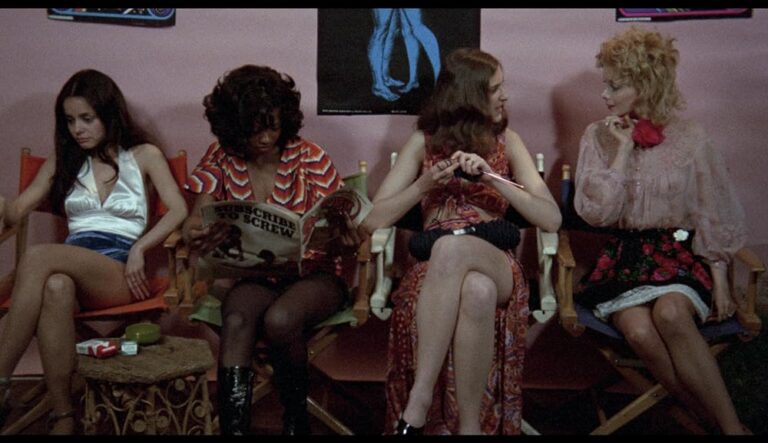
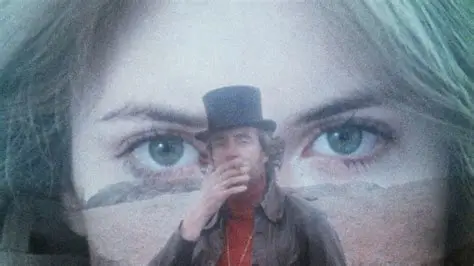
A remarkable 17-year-old Victoria Abril portrays Jose María, a repressed and isolated boy from a middle-class family in a small town skirting Barcelona. He moves through life uneasy, unable to inhabit a self that feels authentic. His effeminacy and gentle demeanor grate against a crude, outdated father who drags him to strip joints and pushes him toward sex workers to prove a masculinity he never asked for. Jose María flees, searching not for who he wishes to be, but for the person he already senses within. Soon he slips into a double existence: a man during working hours, and in his free time a woman in high heels and dresses, stepping closer to truth. The trajectory may initially appear too simple for such emotional intricacy, but that’s where Change of Sex shines. It trusts in proportion—an empathetic filmmaking style built on careful, human balance.
You’ve got the scumbags who treat Jose María like dirt, and then you’ve got the opposite crew—the ones who show up like rough-around-the-edges guardian angels and push him toward who he really is. That split is key to why the story works, because it’s exactly what lets the film drive home its sharp social point. One thing is the role carved out for transgender lives, and another is the spectrum of gay or straight reactions when that identity steps into the light. With a sensitive, clear-eyed empathy, Aranda stresses that unconditional understanding is the hallmark of any society that hopes to transcend its own shadows. Jose María loves and admires his older sister, and that devotion flows both ways. She becomes one of the earliest figures to guide him into the truth of his femininity. There is also the radiant Bibi Andersen, an Almodóvarian transgender figure whose elegance becomes a guiding flame for Jose María. And there’s the incomparable Rafaela Aparicio, delivering what may be the film’s gentlest, most disarming soul. Yet the heart of the film is Victoria Abril, her fine-boned femininity intertwined with shadow-like masculine angles, giving her character’s distress an almost aching realism. She is cast with near-mythic precision—her androgynous aura revealing both the torment of her journey and the humility that gives it meaning. It’s a performance destined to endure.
For all its scenes of awakening and feminine victory, Change of Sex still carries a profound, sometimes piercing sorrow. Critics may fault Aranda and Néstor Almendros’s naturalistic eye for leaning into exploitation-style devices to depict the more lurid stretches of Jose María’s ordeal, but to me they never ring cruel; they feel necessary to the film’s compassionate arc. The film’s bleakest passages open like raw wounds, each cut deepening José María’s resolve to claim womanhood on her own terms. Whether she ultimately finds acceptance in post-Franco Spain becomes secondary; what matters is that the film clears a space where her voice, and the voices of those long silenced beside her, can finally resonate. More than simply a commendable queer narrative or another emblem of the sexual revolution, it stands out as one of the few works genuinely committed to education, reflection, and the delicate shades of experience that so often slip past the cultural frame.