Directed by Steve Carver
Written by Leigh Chapman
Starring:
- Lee Majors as Mike Catton
- Jennifer O’Neill as Cass Cassidy
- Art Carney as Pignose Moran
- George Kennedy as Big Lew Cassidy
- Harris Yulin as Eddie Cassidy
- Redmond Gleeson as Harry
- Terry Kiser as Valentino
Release Date: July 25, 1979
Rating: 
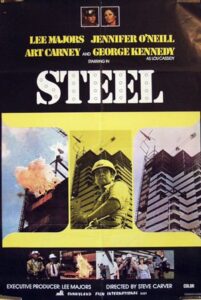
A bold twist on the men-on-a-mission formula, relocating it to the vertiginous battlefield of construction work. Think of The Magnificent Seven dangling atop a skyscraper, contending with modern engineering puzzles, the hazards of high-rise building, and the headaches of corporate bureaucracy.
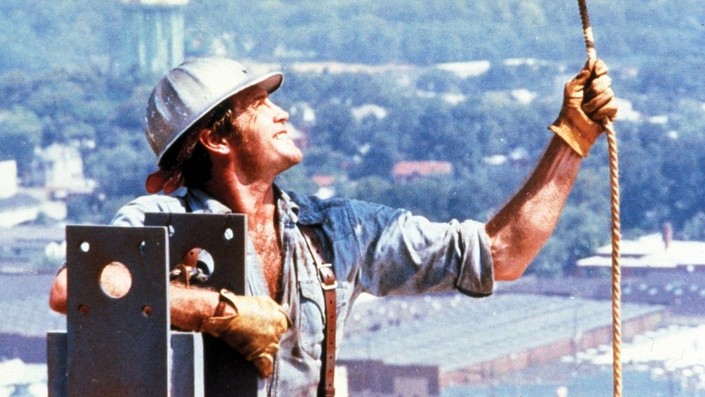
A half-forgotten pseudo-blockbuster stocked with recognizable faces from 1970s genre pictures that, for all its good intentions—chiefly to mythologize the workers behind massive high-rise construction—never quite delivers the thrills its vertigo-inducing premise suggests. Lee Majors plays Mike Catton, a legendary construction hand brought in by Jennifer O’Neill to complete her father’s (George Kennedy) towering project after the man plunges to his death on the upper levels.
Steve Carver approaches the epic material with idealistic intent and a character-building method clearly aimed at pleasing the audience. It’s entertaining in spurts, yet it rarely reaches the intensity a film about skyscraper construction should generate. The thin supply of sharp action sequences—and the nagging absence of solid drama—keeps the narrative mildly engaging but never truly exciting.
Hollywood stuntman A. J. Bakunas died attempting one of the picture’s most dangerous stunts, falling from the Kincaid Towers while doubling for George Kennedy. The tragedy gives the film a peculiar mythic edge. As much as it celebrates construction workers, it also ends up honoring stunt performers—the invisible daredevils who have supplied some of the most heart-stopping moments in movie history. Steel is the kind of movie I respect not so much for the filmmaking as for the idea behind it. Recreating the kind of nerve-testing stunt work that Buster Keaton and Harold Lloyd made legendary feels like the purest definition of movie entertainment. Steel seems to grasp that spirit perfectly, but it never quite figures out how to build a compelling story around it.