Directed by Fred F. Sears
Written by Curt Siodmak, George Worthing Yates and Bernard Gordon
Starring:
- Hugh Marlowe as Dr. Russell A. Marvin
- Joan Taylor as Carol Marvin
- Donald Curtis as Maj. Huglin
- Morris Ankrum as Maj. Gen. John Hanley
- John Zaremba as Prof. Kanter
Rating: 
 Fred F. Sears’ drive-in sci-fi opus stands among the most intriguing articulations of the atomic age’s alien invasion cycle. It indulges in the endearingly cheap iconography of 1950s science fiction, yet beneath the pulp exterior, it sustains a moral and allegorical undercurrent that resonates with its historical moment. In most such Hollywood B-pictures, one of these elements—the spectacle or the subtext—inevitably overwhelms the other, but Earth vs. the Flying Saucers maintains an equilibrium that feels unusually deliberate and composed.
Despite operating within a modest budgetary sphere, the film’s narrative moves with a surprising assurance, its pacing and clarity rivaling that of more prestigious studio efforts. It balances melodramatic flourishes with the clean efficiency of pulp storytelling. The premise, true to its title, is refreshingly direct: Dr. Russell Marvin (Hugh Marlowe), an expert in satellite technology, and his bride (Joan Taylor) witness a flying saucer—an event that precedes a series of similar appearances across the skies of America and the wider world.
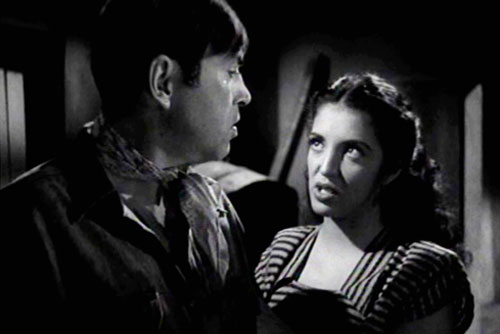
Are the visitors from beyond the stars harbingers of destruction or emissaries of peace? The film’s drama turns on these questions, shared equally by its scientists and its bureaucrats. Hugh Marlowe and Joan Taylor bring a genuine warmth to their roles, convincing us of their moral clarity amid an atmosphere clouded by institutional paranoia. When the film lapses into the obligatory sequences of stilted dialogue and exposition, their presence provides the necessary spark of conviction that keeps the narrative alive. The chemistry between Marlowe and Taylor elevates the film beyond the usual binary of humans versus aliens that defines so much of 1950s sci-fi. What could have been a routine “man versus alien” yarn finds strength in characters who actually register as human beings, anchoring the film’s excitement with feeling.
For sheer spectacle, the laurels undoubtedly go to the masterful special effects engineered by Willis H. O’Brien’s protégé, the incomparable Ray Harryhausen. His flying saucers—those eternal emblems of atomic-age wonder—still possess an uncanny grace and vitality. Watching them sweep across the skies of Washington, D.C., one witnesses the perfect fusion of artifice and awe: the tactile illusion of destruction rendered poetic. In these sequences, Earth vs. the Flying Saucers becomes not just entertainment, but an enduring testament to mid-century visual imagination.
Even with all its entertaining qualities and undeniable craftsmanship, certain flaws keep this B-level effort from joining the upper ranks of 1950s science fiction, alongside The Day the Earth Stood Still, Forbidden Planet, and It Came from Outer Space. The narrative expends its energy too soon, unveiling its most impressive effects almost immediately and deflating the suspense that might have followed. By the second act, the film lays its mysteries bare—who the visitors are and what they want—leaving little to sustain tension. From there, it survives largely on the strength of its performers and the mesmerizing artistry of those iconic saucers. It’s a fair enough way to make a picture, but one can’t help sensing that the intentions were larger and the story richer than its surface-level thrills suggest. Fred F. Sears may not rank among Hollywood’s top-tier directors, yet in the B-movie field he was among the best. Working in tandem with Sam Katzman, another master of low-budget efficiency, he captured the exact mix of imagination and pragmatism that made 1950s atomic-age cinema so lasting.
Man’s immediate turn to violence at the sight of an unknown threat plays neatly as a metaphor for the McCarthy-era fear of anything “foreign,” while the military’s gung-ho tactics toward the saucers work as a quiet jab at Eisenhower’s double-edged diplomacy—aggressive in execution, careful in image. These undercurrents give the film a sturdy satirical base beneath its pulpy surface. It may be pure pop entertainment, but it’s pop with ideas—a combination sorely missing from many modern blockbusters. Such harmony between satire and spectacle feels rare today, which is why revisiting the thoughtful sci-fi of the atomic age remains such a pleasure.