Directed by Luis Buñuel
Written by Luis Alcoriza and Luis Buñuel
Starring:
- Pedro Armendáriz as Pedro (El Bruto)
- Katy Jurado as Paloma
- Rosita Arenas as Meche
- Beatriz Ramos as Doña Marta
- Andres Soler as Andres Cabrera
Rating: 
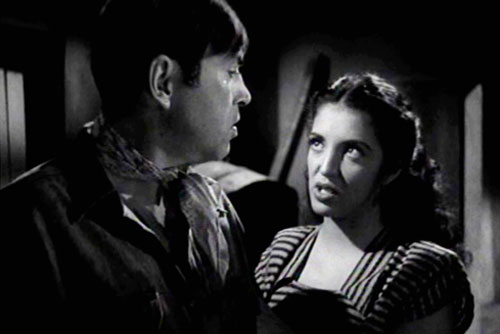
 Luis Buñuel ditches realism (and even his usual surrealist edge) in favor of full-tilt melodrama in this grubby tale of social inequality and capitalist exploitation; still, flashes of aesthetic naturalism and a nasty streak of noir fatalism seep through the film’s unmistakable atmosphere of sweaty Mexican soap opera. Buñuelian irony—laced with a healthy dose of sociopolitical cynicism—drives the subversive core of this story about two worldviews tearing at each other’s throats: individualism and collectivism. Caught in the middle are selfishness and empathy, conflicting impulses felt by the film’s macho protagonist, played by Pedro Armendáriz, who takes a dirty job from a corrupt landowner (Andrés Soler) to evict a community of impoverished working-class families. Pedro Armendáriz’s Bruto is a walking slab of muscle with barely a flicker of brainpower—obedient as a trained guard dog when carrying out his master’s orders, but brutal and intimidating when dealing with the poor saps in his path. In Luis Buñuel’s view of how the real world works, money gives the orders and the law dutifully backs it up. Death, romance, and the rest are just melodramatic hot sauce splashed over his social critique—and it makes for one hell of an entertaining ride. Set amid squalor and sweaty decadence, the film leaves redemption strictly off the table, yet it still charts a character arc that’s surprisingly gut-wrenching—far more sincere than the acidic irony we normally expect from Luis Buñuel. The fiery Katy Jurado tangles with El Bruto in a mix of lust and hostility, while the gentle Rosita Arenas coaxes a sliver of tenderness out of the hulking brute. Through these encounters, Pedro Armendáriz reveals a strange humanity beneath the brute’s muscle, exposing social hypocrisy, primal sexual politics, and the complacent hypocrisy of the bourgeoisie—one of Luis Buñuel’s favorite objects of ridicule. It’s a mean, torrid little movie that somehow finds empathy in the most unlikely of men.