-Celluloid Dimension’s most unapologetic section, where we share the best of the worst. Bringing bad movies the love they deserve.
Directed by Lucio Fulci
Written by Lucio Fulci and Carlo Alberto Alfieri
Starring:
- Katia Kučirek as Marcella
- Al Cliver as Mark
- Jessica Moore as Virginia
- Maurice Poli as George
Rating: 
 Everything about Lucio Fulci’s direct-to-video supernatural shocker arrives a step behind. His only dip into Nazisploitation fare came when the subgenre itself was staggering toward the grave. That makes it a late quasi-Nazisploitation outing from the late stage of Fulci’s career. And forgive the repetition, but even the well-worn devices of the haunted house film—trotted out here with mechanical regularity—feel more suited to the horror structures of the 1970s. Perhaps, then, it’s also a latecomer to that tradition.
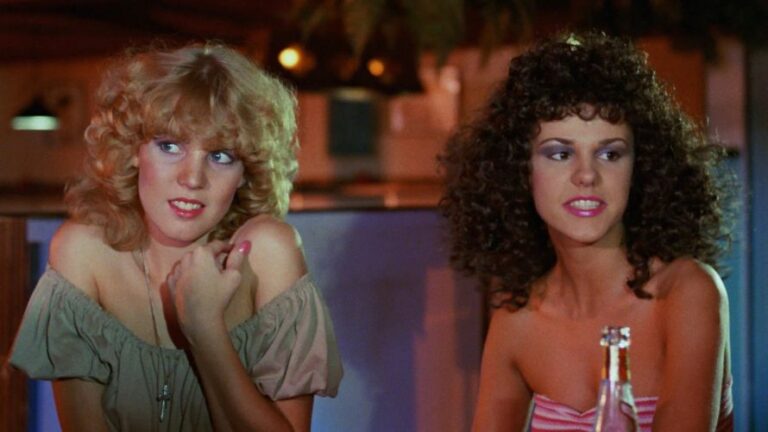
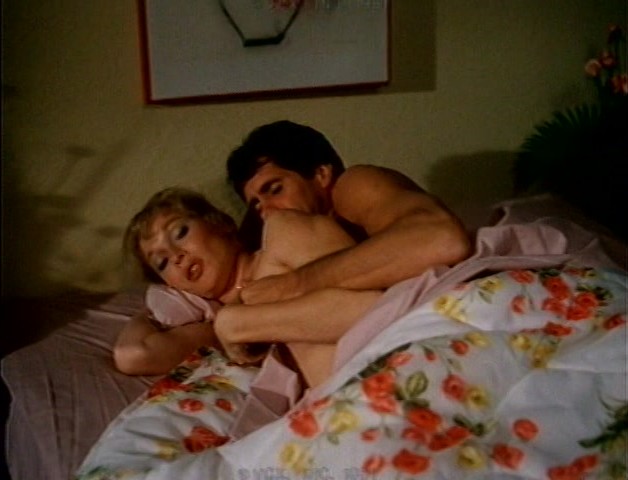
Whatever the excuse, Sodoma’s Ghost blasts off with a long, sweaty Nazi bacchanal in a hidden villa somewhere in the French countryside, WWII still raging outside. The officers are snorting coke, drowning naked bodies in champagne, and screwing in every position known to man—and maybe a few they invented on the spot. Then, boom: the Allies drop in, literally, and the whole scene goes up in flames. Cut to the present, and a pack of oversexed kids find the place, bust the lock, and make it their playground for the night. Cue the dusty ghost-house routine. It’s exactly what you’d picture if someone pitched you “Fulci does Nazisploitation with a haunted house.” And if those dead Nazis didn’t finish the job in the past thanks to the Allied blitz, they’re more than happy to pick up where they left off—using these clueless juveniles as their final act.
Fulci ladles out a thick measure of softcore decadence, rivaled only by the delirium of The Devil’s Honey. Bereft of any intricate erotic tension, the film’s spectral threat manifests as lascivious Nazi revenants enacting their indulgences upon the equally impassioned young interlopers ensnared in the villa’s libertine chambers. It’s hilarious when Fulci’s unintentional histrionics spiral into an operetta of seduction and petty squabbles. It’s far less amusing when his attempts at genuine creepiness collapse into limp exploitation. This might well be the biggest flop of Fulci’s career—and not entirely by his own doing. Fresh off a troubled co-directing stint in the Philippines on the dreadful Zombie 3, and already in poor health, Fulci had only four rushed weeks to shoot Sodoma’s Ghost on a budget even smaller than his usual shoestrings. The producers, in constant conflict with him, insisted the film be delivered on schedule no matter what. Thus, Sodoma’s Ghost became an exercise in padding, its hollow stretches existing solely to meet the length decreed by those who bankrolled it.
Talking about Sodoma’s Ghost is a pain, especially if you’re a Fulci die-hard, because on paper this thing has all the ingredients he could’ve turned into gold back in his early-’80s prime. But here’s the ugly truth—it ain’t gold. Fans hate it, Fulci hated it, and yet… I kind of like it. It’s phoned-in, more a paycheck than a passion, and yeah, that’s obvious. Even with Vincenzo Tomassi cutting and Carlo Maria Cordio on the score, the whole thing still feels lost. It’s top-tier talent delivering bottom-shelf work thanks to a production from hell. Yet within the collapse—within the fractured rhythm and discordant creative gestures—there remains a quality, faint yet unmistakable, of endearing depravity. It seeps through each ruinous tableau of this belated failure from one of Italian exploitation cinema’s most consummate craftsmen. It is what it is.