Directed by Marijan Vajda
Written by Marijan Vajda
Starring:
- Werner Pochath as The Man
- Ellen Umlauf as The Mother
- Birgit Zamulo as Young Girl
- Lajos von Bagghi as Chef
Rating: 
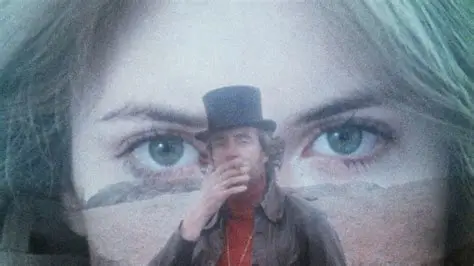
 There’s something radical, almost transgressive, in the film’s decision to dive headlong into the fractured psyche of a deranged soul and stay there, mapping out a world shaped by twisted impulses and private revelations. Rather than framing horror as something external, it turns inward — a claustrophobic plunge into pathological thought. The result is a bleak and mesmerizing psychological shocker, steeped in exploitation’s seediest traditions, but strangely reflective. We aren’t introduced to a conventional madman bred for revulsion, but to a deaf-mute loner whose violent compulsions are tangled with sorrow, isolation, and an unnerving sense of innocence. It’s a moral conundrum: his crimes are as brutal as any cinematic serial killer, yet the film dares us to feel pity. Werner Pochath plays the bug-eyed freak at the heart of the madness — the Mosquito, as he calls himself, which already tells you this guy ain’t normal. He’s a quiet, clean-cut number-cruncher by profession, but behind closed doors it’s just him and his army of mutilated dolls, which he smashes to bits like he’s purging demons. It’s his way of dealing with the wreckage of his childhood, one cracked porcelain limb at a time.
The past comes crashing in through violent flashbacks, each one peeling back the layers of a childhood soaked in cruelty. His muteness and deafness weren’t born of biology, but of beatings — savage, senseless, and administered by a father who seemed to take pleasure in erasing him. But not only that, he also witnessed multiple sexual assaults that his little sister suffered at the hands of this abominable man. The bulk of the film’s exploitation lies in the flashbacks — and I’m talking real ugly, no-holds-barred scenes of domestic hell. Be warned: they’re not just disturbing, they’re stomach-turning. Outside that, the film shifts gears and gives us a quieter horror — the daily grind of a grown-up sicko trying to live with the mess inside his head.
As if things weren’t already unsettling enough, the film grounds its horror in grim reality — Werner Pochath’s character is modeled, at least in part, on the notorious Vampire of Nuremberg. Only fragments of the killer’s gruesome routine are retained: some necrophilia, and a disturbing obsession with extracting blood from the dead. But Vajda’s muted, almost sorrowful direction refuses to cast him as a monster outright. Instead, he becomes something sadder — a ruin of a man, haunted rather than merely horrific. The film doesn’t care to judge him — there’s no moral soapbox here. It just watches. Pochath’s quiet, aching performance as the Mosquito is all about grief pushed so far down it comes out sideways — as violence. And what’s scary is how much pity he stirs up. You start to feel that the guy doing the damage was once on the other end of it. Abuse flows both ways, and this one makes it painfully clear: the depraved don’t come out of nowhere. They’re made that way.
What makes this character especially disturbing is that he lacks the usual compulsion to kill. His few murders arise not from lust, rage, or catharsis — but from mere inconvenience. The actual killing doesn’t come until the very end. Up to that point, we witness something stranger: Werner Pochath drifting from wake to wake, violating corpses in silence, feeding on the blood of the dead with a cold, ritualistic detachment. Pochath sells the role with creepy, dead-eyed intensity. No lines needed — his body language does all the work. You can see the tension building in every movement. He tries to cool off by hitting up hookers, hoping that regular lust will cancel out the weird blood-lust eating at him. No dice. He figures it out too late: it’s not sex he wants, it’s the red stuff.
For all its trashy rep, this German-Swiss Section 3 Video Nasty is a surprisingly introspective slice of horror that’s worth decoding. The trouble is, the film cloaks itself in riddles. It resists clarity. Religious symbols flicker through its frames like muted signs, and its almost painterly use of red — lush, violent, seductive — implies meanings that reach beyond the trauma it so vividly portrays. Perhaps depravity is only the symptom, and the root lies elsewhere. Surely, there is something more philosophically charged behind its necrophiliac imagery than mere exploitation or a lazy diagnosis of the killer’s mind. Whatever the case, few films dare to immerse us so deeply in the diseased interiority of a predator. BloodLust, or Mosquito the Rapist, descends to a place of horror so stark, so desolate, that it brushes against true psychological realism — a rare and unsettling achievement.