Directed by Abel Ferrara
Written by Nicholas St. John
Starring:
- Harvey Keitel as Eddie Israel
- Madonna as Sarah Jennings
- James Russo as Francis Burns
- Nancy Ferrara as Madlyn Israel
- Reilly Murphy as Tommy
Rating: 
Ironically, Abel Ferrara’s contemplative, self-referential descent into Hollywood’s moral ruin begins with a domestic tableau that evokes an almost epicurean idyll—good wine, luscious pasta, unhurried sex, and the serene rituals of family life—offered with the same thin veneer of hypocrisy that coats the film industry Eddie (Harvey Keitel), New York filmmaker, father, and husband, inhabits. This counterfeit vision of American familial bliss, positioned before one of the most inimical and spiritually corrosive narratives of 90s cinema, is eerily effective, made even more disquieting by the unrelenting negation of those ideals that follows. Dangerous Game becomes self-annihilating hedonism refracted through the raw videographic prism of a film-within-a-film, the perfect multidimensional arena for Ferrara to wrestle with his own immoral phantoms.
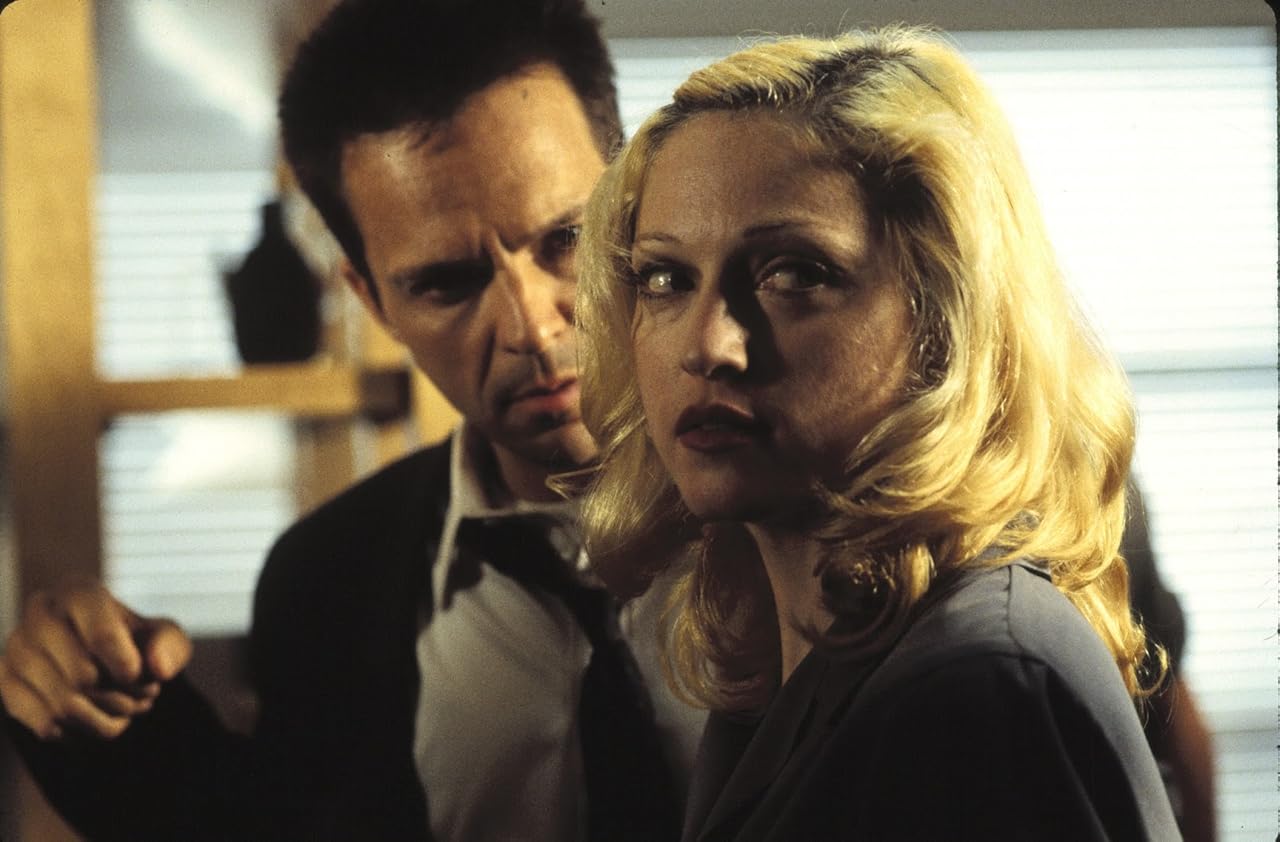
Not much of an epic arc unfolds in Ferrara’s bleak meta-cinematic construct; the entire narrative is anchored in the banal. Harvey Keitel’s flawed, libertine filmmaker directing a film about the marital breakdown of a kinky L.A. couple (Madonna and James Russo) becomes the unromantic routine through which Dangerous Game articulates its cinematic ontology as a form of abreaction therapy. Yet it is precisely within this routine banality that a disruptive existential force overwhelms our incorrigible protagonist. Having already embodied the narcotic delirium of Ferrara’s Bad Lieutenant, Keitel’s work here is even more visceral than his 1992 turn as the sleazy cop. It is as though he intuitively grasps the perilous demands of Ferrara’s camera, delivering a powerhouse performance that fulfills the film’s metaphysical rigor.
The entire exercise may drift toward the pedantic and even the masturbatory in Ferrara’s fiercely individualistic, dramatized meditation on the craft of moviemaking and its murky intricacies. Yet if watching Ferrara enact his sins onscreen renders the film an egocentric indulgence, I accept it without hesitation—Dangerous Game was a genuine revelation for me. Many filmmakers use cinema as a confessional, but Ferrara, unlike most, is utterly unapologetic. He seeks to sublimate his own moral rot by crafting stories that echo his darkness, as if filmmaking itself were a ritualistic justification for his transgressions. Artists romanticizing self-destruction is nothing new—Hollywood is littered with their myths—and Ferrara fits comfortably within that lineage of the unapologetically “politically incorrect.” The film’s movie-within-a-movie conceit is compelling enough, but what electrifies it is Ferrara’s mimetic bond with his characters and the images he creates. Madonna brings a quietly piercing vulnerability to the screen, while James Russo’s violent counterpoint lands with brutal impact.
The film Eddie directs becomes a grotesque mirror of his actual life. When the cameras roll, his true self erupts through the compulsive impulses embodied by James Russo’s character; when he calls cut, his existence collapses back into the dull, repressed pretense he tries to maintain. Ferrara suggests that the cinematic apparatus grants Eddie the only space where he can reveal who he truly is—monstrous or not—serving as a necessary, metaphorical exorcism. Dangerous Game may appear to be a mean-spirited indictment of Hollywood’s dubious morality, yet I see it as the reverse: Ferrara confronts that corrosive duplicity and celebrates cinema’s speculative power for self-expression. Here, he can unleash his darkest fantasies without anyone judging him—after all, it’s “just a movie,” right? That’s why Dangerous Game truly lives up to its name as one of cinema’s riskiest gambles.