Directed by David Schmoeller
Written by David Schmoeller
Starring:
- Klaus Kinski as Karl Gunther
- Talia Balsam as Lori Bancroft
- Barbara Whinnery as Harriet Watkins
- Carole Francis (credited as Carol Francis) as Jessica Marlow
Rating: 
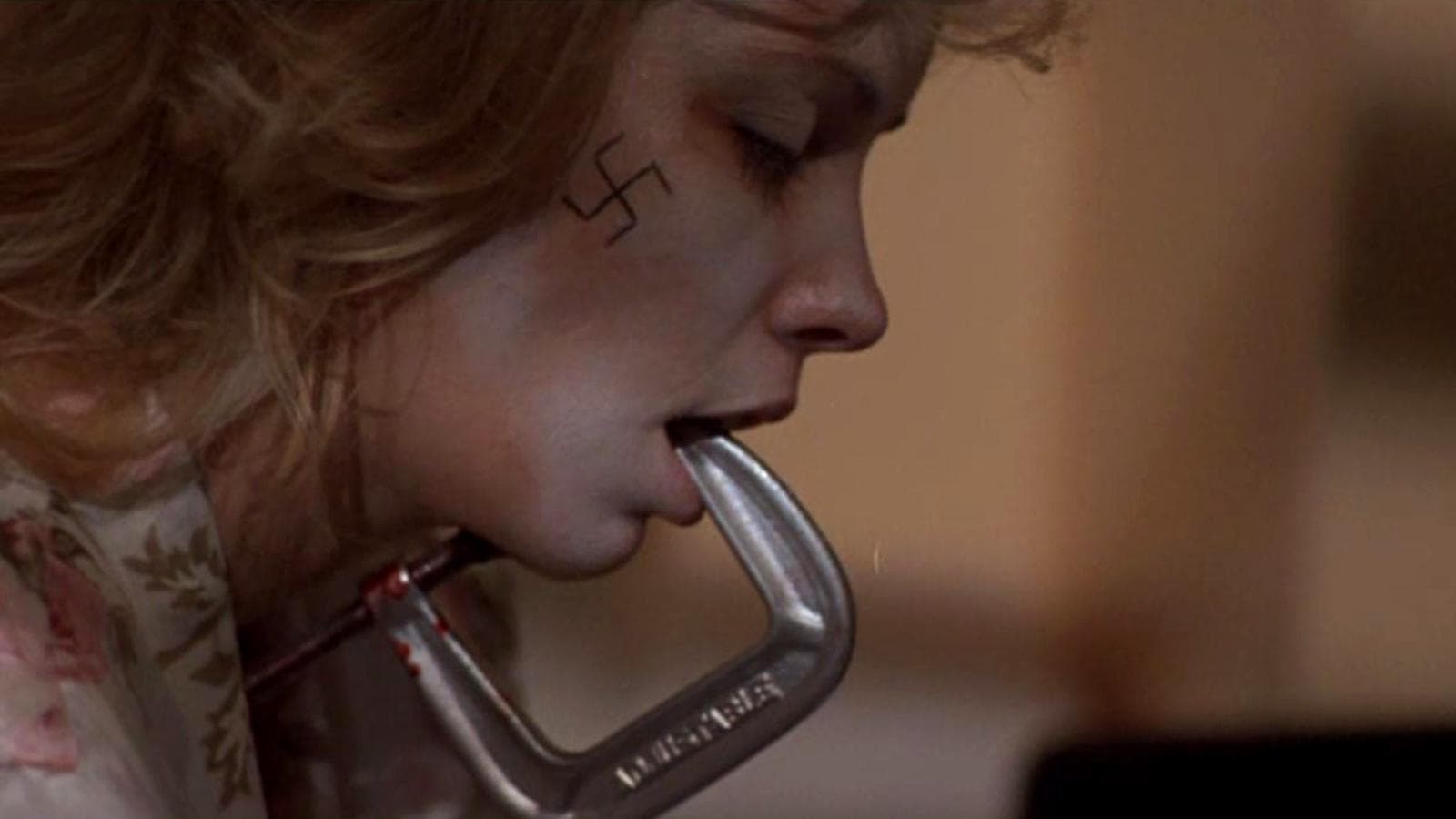
A freaked-out, blood-spattered pseudo-slasher with enough dirty laughs and trash humor to feel downright obscene next to its venomous digs at neo-Nazi madness. And who better to anchor it than Klaus Kinski? He’s a deranged ex-doctor, son of a high-ranking Nazi butcher, running a rundown U.S. apartment block like his own private dungeon. His entertainments are pure sickness: loading the revolver for Russian roulette, spying on women through the ducts, flinging rats into bedrooms, and whispering death-soaked confessions to the tongueless captive he keeps in a cage beneath the rafters. Every word and gesture is drenched in the theater of compulsion. Nothing less than Kinski unbound.
David Schmoeller belongs to that crazy club of filmmakers who had the guts to wrangle Klaus Kinski. True to form, the shoot was a circus of tantrums and shouting matches, and the whole thing almost went down in flames thanks to Kinski’s temper. Producer Roberto Bessi even thought about firing him and sticking someone else in the role. Thank God that didn’t happen, because Schmoeller’s script was tailor-made for Kinski’s cranky, mean-as-hell energy. No one else could have pulled off Crawlspace’s deranged creep the way he did.
From the outset, Crawlspace frames its sadistic voyeur in a decayed, decadent haze—already the blueprint for a Kinski fever dream. Schmoeller’s direction staggers between senseless amorality and deliberate corruption, while Kinski channels both with sinister grace. When the slaughter accelerates and his derangement spills into unrestrained anarchy, the film descends into true nightmare. It is in those suffocating depths that Crawlspace bares its teeth, daring to unmask the postwar shadow: the lingering stench of Nazi dogma, the wounds of trauma, the corrosive hatred of a generation bred in Hitler’s furnace and lost in modernity. What first seems tawdry exploitation curdles into a venomous parable of postwar despair.