Directed by Norifumi Suzuki
Written by Masahiro Kakefuda and Norifumi Suzuki
Starring:
- Reiko Ike as Ochō Inoshika/Kyoko Kasai
- Christina Lindberg as Christina
- Akemi Negishi as Shitateya Ogin
- Ryōko Ema as Omiya
- Yōko Hori as Okinu
- Naomi Oka as Okoi
Release Date: February 17, 1973
Rating: 
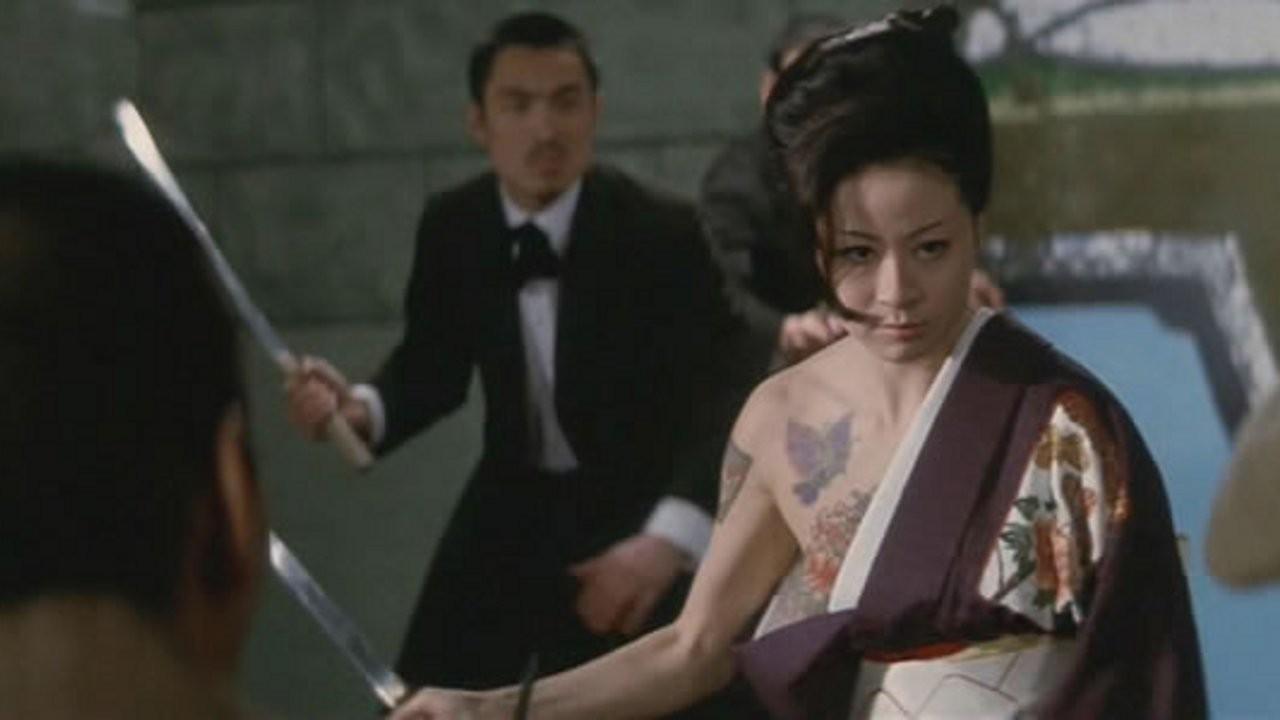
Wanton excess in violent eroticism and revenge-soaked romanticism—this is Norifumi Suzuki operating at full, feral throttle. His crude, kick-you-in-the-teeth pinku eiga erupts with undiluted swagger, carving out one of the most visceral revenge sagas ever vomited onto celluloid. It’s nasty but irresistibly seductive, a delirious fusion of the obscene and the delectable, all staged with a fierce command of sensuous erotica and overblown gore that never dilutes the film’s raw, scab-covered heart. Pinky-violence icon Reiko Ike plays Ochō Inoshika, a woman forever branded by watching her father hacked down in childhood. Her life narrows into pure, sharpened vengeance—a mission to honor his memory and obliterate the perfidious men who now bask in the rotten glow of political power.
Suzuki’s vengeful grandstanding is pure style—every slash, every spurt of violence choreographed like savage ballet. Revenge isn’t just a theme here; it’s treated as the only real justice in a world crawling with gutter-level power players. Because the movie runs almost entirely on stylistic voltage, the story tears ahead with anarchic cool, splitting into two distinct tracks: the razor-edged vendetta of Ochō Inoshika, which feels like its own grindhouse epic, and the steamy thread of Christina (a killer turn by Christina Lindberg), a foreign spy tangled up in forbidden love. Yet the emotional ruin of these two women bleeds together. As the film reveals the morbid pasts haunting its characters, Sex & Fury ascends to its highest form: an uncompromising kaleidoscope, oscillating between the poignant and the grotesque with astonishing simultaneity. It’s a hell of an achievement.
The sumptuous Meiji-era backdrop saturates the film with a feverish vitality, letting the mise-en-scène bloom into a lush tapestry where every drop of blood becomes part of the visual spectacle. Against this ornate setting, Reiko Ike transforms combat into an eroticized choreography, her blade—katana or perhaps a tanto—moving in perfect counterpoint to the supple rhythm of her nude, agile form. The violence feels ritualistic, fierce but never devoid of that fleeting, human tenderness that cuts through even the most stylized carnage.