Directed by Claude Chabrol
Written by Claude Chabrol and Caroline Eliacheff
Starring:
- Isabelle Huppert as Jeanne
- Sandrine Bonnaire as Sophie Bonhomme
- Jacqueline Bisset as Catherine Lelièvre
- Jean-Pierre Cassel as Georges Lelièvre
- Virginie Ledoyen as Melinda
- Valentin Merlet as Gilles
Release Date: August 30, 1995
Rating: 
In an Italian TV interview with Pier Paolo Pasolini in 1971, the inquisitive interviewer asks the controversial Italian director, “Who are the people you love the most? To which he eloquently replies, “The kind of people I love the most by far are the people who perhaps never even reached the fourth grade. Very plain and simple people, and these are not just empty words on my part. I say this because the culture of the petit bourgeoisie, at least in my nation but perhaps in France and Spain as well, always brings corruption and impurity along with it, while an illiterate, or those, who barely finished the first grade always have a certain grace, which is lost as they are exposed to culture. Then they find themselves once again at the highest level of culture. But conventional culture always corrupts.”
This fleeting moment of Pasolinian enlightenment became, for me, an unavoidable point of return—an almost involuntary epiphany—while watching Claude Chabrol’s iconoclastic La Cérémonie. Chabrol once joked that it was “the last Marxist film,” a line delivered with more burlesque mischief than ideological rigidity, yet sharp enough to deserve consideration as a sincere insight. It feels even more plausible when one remembers that the film comes from one of the most industrious and revered figures of the French New Wave, a movement whose aesthetic revolutions were inseparable from their Marxist undertones. La Cérémonie stands among the many salvos of leftist subversion produced during both the Nouvelle Vague and its aftermath, but Chabrol’s 1995 adaptation of Ruth Rendell’s A Judgment in Stone occupies a singular corner of that lineage. It is furious yet placid, radical yet deliberate, disquieting yet strangely tender. The humanism that radiates from Pasolini’s words in that 1971 interview—unintentionally—became a compass for me, guiding my reading of the icy precision that defines Chabrol’s filmmaking.
With Chabrol, simplicities blur into complexities—at times they feel virtually interchangeable—as the film ushers us into Sophie Bonhomme’s world. Played with quiet acuity by Sandrine Bonnaire, Sophie is a wary yet observant young woman hired as a maid by an affluent family living in an isolated Breton mansion. Before her employment is finalized, she sits through an interview with Catherine (Jacqueline Bisset), whose gracious demeanor carries a faint air of practiced civility rather than sincere warmth. Catherine is the mother of a teenage son and stepmother to a younger daughter, both children of her husband, Georges (Jean-Pierre Cassel). Sophie’s early days on the job unfold with uneventful regularity; she acclimates easily to the rhythmic calm of this bourgeois household. Yet she remains meticulous and reserved—keenly aware that this is a milieu defined by wealth, refinement, and social privilege, while she occupies the station of a domestic worker. Georges and Catherine may treat her kindly and admire both her diligence and her cooking, but the invisible barrier dividing their worlds remains unmistakable, lending every interaction a troubling, ambiguous charge.
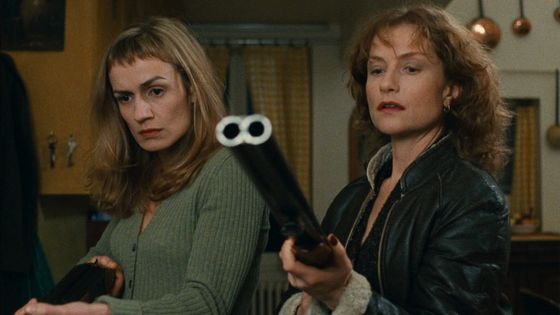
Through Sophie’s eyes, the family appears judgmental, old-fashioned, brittle in their manners; through the patronizing glances of Georges and Catherine, Sophie herself becomes a figure of self-inflicted victimhood, a woman they perceive as dull, withdrawn, even vaguely menacing. The days pass with a steady sameness—no dramatic shift, no ostensible rupture. Chabrol, ever the Hitchcockian craftsman, builds tension through immaculate staging and misleading calm: his frames hint at danger without ever exposing it. Only when Sophie’s illiteracy comes to light does the narrative acquire a faint tremor of conflict, though the film refuses to fully exploit that revelation until its anarchic final movement. The structure obeys the logic of a ritual: an orderly progression that summons, step by step, a violent culmination enacted once Sophie’s divided subjectivity coalesces into a singular force. Yet Sophie is not the sole catalyst—another figure proves integral to Chabrol’s Hitchcockian machinery. Jeanne (Isabelle Huppert), the talkative, irreverent postmistress who befriends Sophie, embodies a vibrant working-class solidarity. Their conversations, their shared laughter, their conspiratorial energy, amount not merely to empathy but to rebellion. Huppert devours the role—her sharp, almost dangerous vivacity turns Jeanne’s anarchic spirit into something electric. But the brilliance here is collective rather than individual: Bonnaire and Huppert together generate a volatile chemistry, dynamite in the most insurgent sense.
The force of Chabrol’s strange, disciplined formalism hits like a covert blast of radical filmmaking. Watch how the narrative’s careful architecture syncs with the camera’s metaphysical gaze, and you’ll feel the shock of rebellion pulsing under those deceptively calm visuals and elegant cuts. The emotional contrasts hide in plain sight—easy to miss when you’re wrapped in the film’s layered tensions—but the shift from static shots to sudden, prowling camera moves reveals that the film’s supposed serenity was always a façade for something harsher. Its dry, vicious finale is one of the sharpest middle fingers ever aimed at bourgeois pretensions. And Sophie? She may be the most magnetic illiterate character the screen has produced—not because we excuse her crime, but because we recognize her anger as righteous. A far sharper, braver intelligence than anything flaunted by the educated blowhards who cling to their class superiority.