Directed by Robert Siodmak
Written by Daniel Fuchs
Starring:
- Burt Lancaster as Steve Thompson
- Yvonne De Carlo as Anna
- Dan Duryea as Slim Dundee
- Stephen McNally as Det. Lt. Pete Ramirez
- Esy Morales as Orchestra Leader
- Tom Pedi as Vincent
- Percy Helton as Frank
Release Date: January 19, 1949
Rating: 
The classic noir verdict—“I didn’t get the money, and I didn’t get the woman”—etched into the cruel ironies of Double Indemnity, finds its resonance in Burt Lancaster’s Steve Thompson, a romantic casualty seduced by his own intoxicating fantasies.
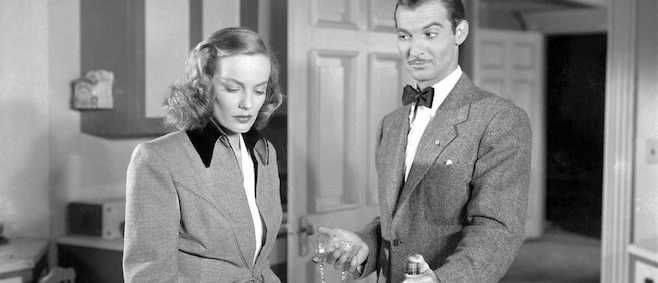
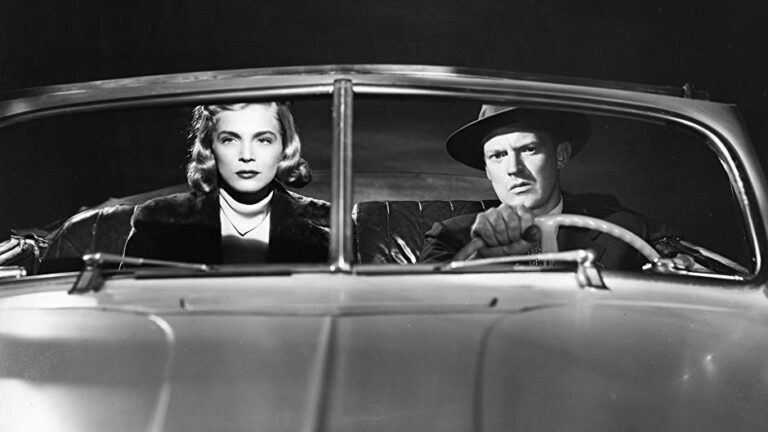
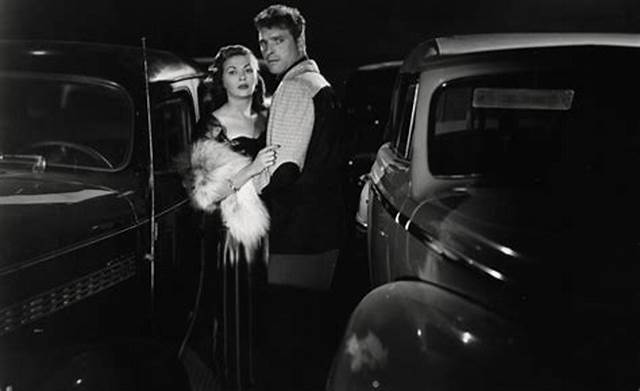
By means of a crisp, explanatory flashback, Robert Siodmak’s bleak noir retraces the emotional entanglements that lure the optimistic Steve into a spectacularly tragic heist. Convinced he can win back Anna (Yvonne De Carlo), he returns to Los Angeles only to find her remarried to the city’s brutal alpha, Slim Dundee (Dan Duryea). But even Slim’s explicit warnings fail to deter him; instead, Steve clandestinely courts Anna, triggering a cruel and treacherous romantic collision. As the rivalry grows increasingly volatile, De Carlo’s duplicitous allure—equal parts tenderness and predation—engineers the dynamic with quiet, calculating malice, exploiting Steve’s earnestness for her own ruthless ends.
Siodmak proves remarkably shrewd in differentiating earnest motives from corrupt ones within this poisonous love triangle, though it functions largely as a crafty sleight of hand designed to absolve Burt Lancaster’s Steve of culpability; first we root for him, then for the adulterous romance he rekindles with Anna, and finally for no one at all. The slide from hopefulness to despair requires nothing more than a sudden shift in angle, but Siodmak doesn’t foreshadow such disillusionment—he ambushes the viewer with a blunt, caustic fury right when confidence feels most secure. At times, the film seems to gratuitously tangle its pulp architecture in pursuit of stylistic grandeur; it is quite plainly a thriller dressed up as melodrama rather than the other way around. And to my mind it would have flourished far more as a melodrama masquerading as a noir thriller. Or perhaps I’m simply blind to whatever structural integrity its narrative method hides, or perhaps I’m just envious of how ruthlessly efficient this compact B-picture is at pulverizing any semblance of joy with so little effort. In any case, Robert Siodmak’s Criss Cross stands as a flawed miniature masterpiece of post-war nihilism. But a masterpiece nonetheless.
Shot amid the restless, glittering expanse of downtown Los Angeles—exquisitely framed by Franz Planer, the great Viennese stylist—the picture recasts the city’s energy as a breeding ground for grime and spiritual corrosion. Despite the brightness of its climate, the harsh monochrome palette exudes only nihilism and a profound vacuum of feeling. What unfolds is a noir of abrupt and elegant tonal ruptures, each shift arriving without warning; and its closing image remains one of the most hopeless, bone-deep endings the American noir tradition has ever delivered—leaves the viewer suspended in utter despair.