Directed by Paul Vecchiali
Written by Paul Vecchiali
Starring:
- Jacques Perrin as Émile
- Julien Guiomar as Inspector Simon Dangret
- Eva Simonet as Anna Carré
- Paul Barge as “Le Chacal”
- Jacqueline Danno as Monique
- Katja Cavagnac as Florence
- Jean-Pierre Miquel as Chief Commissioner
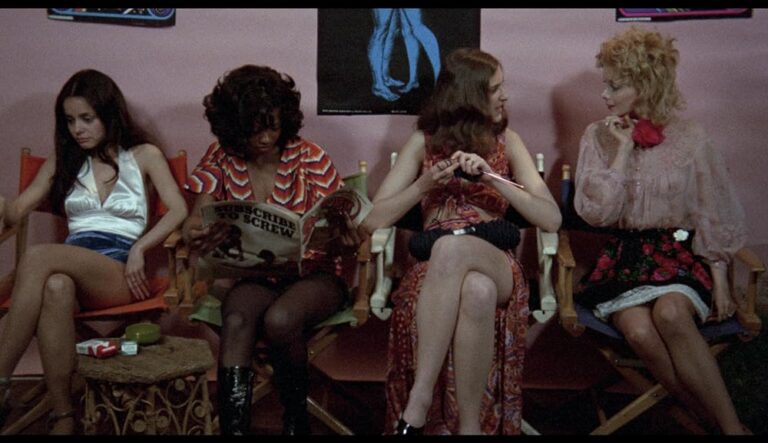
- Hélène Surgère as Hélène, the lonely actress
Release Date: May 31, 1970
Rating: 
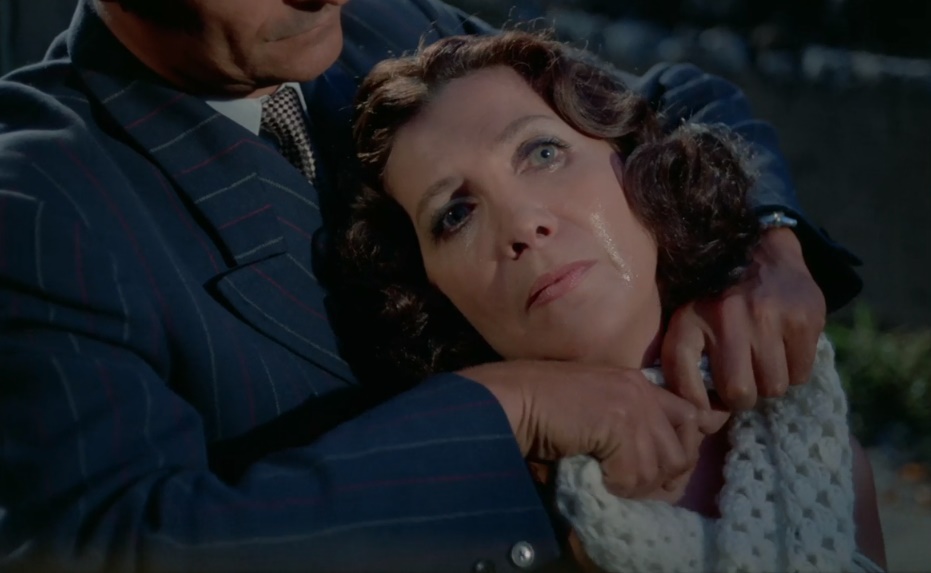
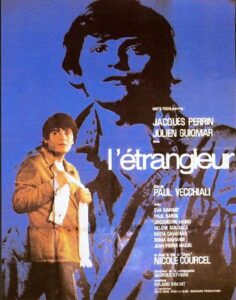 When highbrow intellect crashes into genre cinema without fully committing to the marriage, it just kind of stalls out in the chilly vacuum of The Strangler. What first plays like a sly queer excavation of repression—following a baby-faced killer (Jacques Perrin) drifting through Paris and throttling lonely, depressed women—keeps mutating into something heavier. Suddenly it wants to be a philosophical autopsy of post-war alienation, urban ennui, and the slow suffocation of living without a fixed identity. And right when those existential gears start clicking into place, Paul Vecchiali doubles down on formal severity, tangling the allegory even further until the whole thing reveals itself as a generational Parisian satire, with liberal idealism and reactionary backlash circling each other like combatants who forgot why they’re fighting.
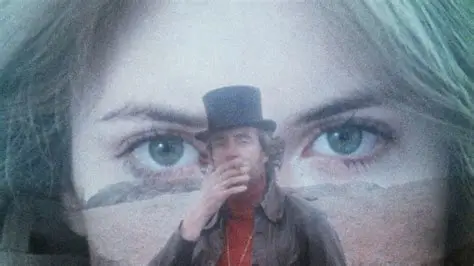
On one side, the film frames its gallery of melancholy, abandoned women through a haze of guilt, turning their suffocating deaths into something closer to ritualized self-erasure than outright homicide. On the other, Émile—played with eerie calm by Jacques Perrin—is treated less like a predator and more like a beatified redeemer, drifting through the carnage with the glow of a reluctant savior instead of an executioner. The contrast doesn’t sharpen the blade; it dulls it, feeding ambiguity where a razor-edged thriller should cut clean. To juggle these loaded ideas, Paul Vecchiali reduces the stage to three generational and political archetypes: the killer, the inspector, and the thief. All that emotional abstraction pulses through this triangle, yet dramatically it never transcends a skeletal genre framework, a crime story straining under the weight of its own cerebral ambitions.
All that frostbitten detachment and stripped-down form in The Strangler seems designed to trap us inside a chamber of introspection. Yet what’s meant to register as existential inquiry sometimes lands like a strained homage to Michelangelo Antonioni’s architecture of alienation, transplanted awkwardly into postwar France. At moments, it’s almost self-parody. And this comes from someone who reveres Paul Vecchiali—his 1975 porno-noir fever dream Don’t Change Hands proves how elegantly he can fuse intellect and vice. But here he feels corseted by scholarly restraint, as if the film is determined to pass a thesis defense instead of seducing its audience. Too elegant to wallow in sleaze, too abrasive to qualify as refinement, it hovers in between. Impeccably assembled, yet hollow at the core?