Directed by Tatu Heikkinen & Veleda Thorsson-Heikkinen
Written by Tatu Heikkinen & Veleda Thorsson-Heikkinen
Starring:
- Tatu Heikkinen as K.
- John Haughm as Hat Man
- Veleda Thorsson-Heikkinen as The Wife
- Davey Ferchow as The Father (voice)
- Sandy Keys as Narrator (voice)
Release Date: September 2025
Streaming Release Date: February 2026 (on Tubi)
Rating: 
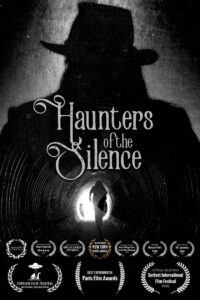 Finnish folk horror as oneiric realization finds one of its most bewildering abstract manifestations in the debut film from husband-and-wife filmmakers Tatu Heikkinen and Veleda Thorsson-Heikkinen, who co-direct and co-write a bizarre excursion into nightmarish expressionism that refuses the comfort of clear meaning. At first glance, Haunters of the Silence might seem almost self-explanatory, its intentions easy enough to infer and its narrative legible as a meditative horror story about the loss of a loved one and the quiet devastation of grief. But the film’s mood operates on a far stranger frequency, conjuring emotional textures that stretch well beyond the tired rhetoric of melancholy that horror cinema so often falls back on.
There’s nothing pathetic here, and thankfully no cheap metaphors cluttering the place up. Haunters of the Silence feels too deeply for that, projecting everything into such an inexplicable dimension that trying to pin it down would feel useless—almost absurd against its own warped rhythm. The folklore dreamed up by this Finnish filmmaking duo morphs what might seem like an unruly avant-garde nightmare into a swirling kaleidoscope of shapes, apparitions, and distortions that manages to be as beautiful as it is disturbing. I’m not totally sold on every element, but I’m absolutely sold on how impressive and shocking the whole thing feels.
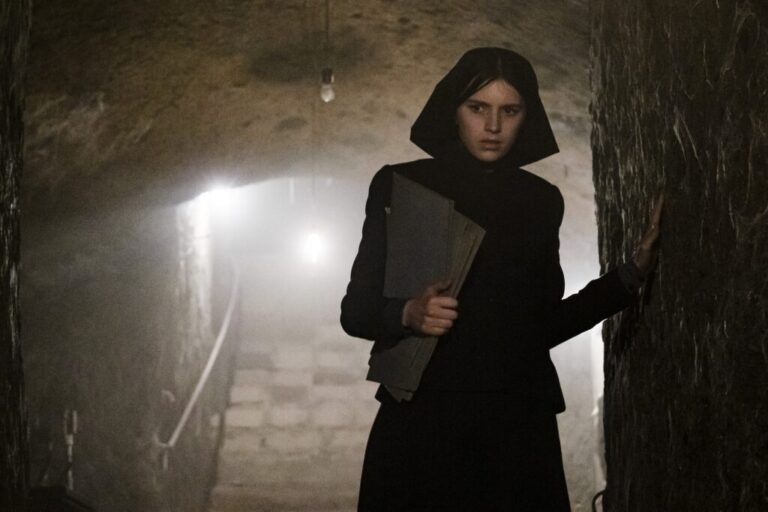
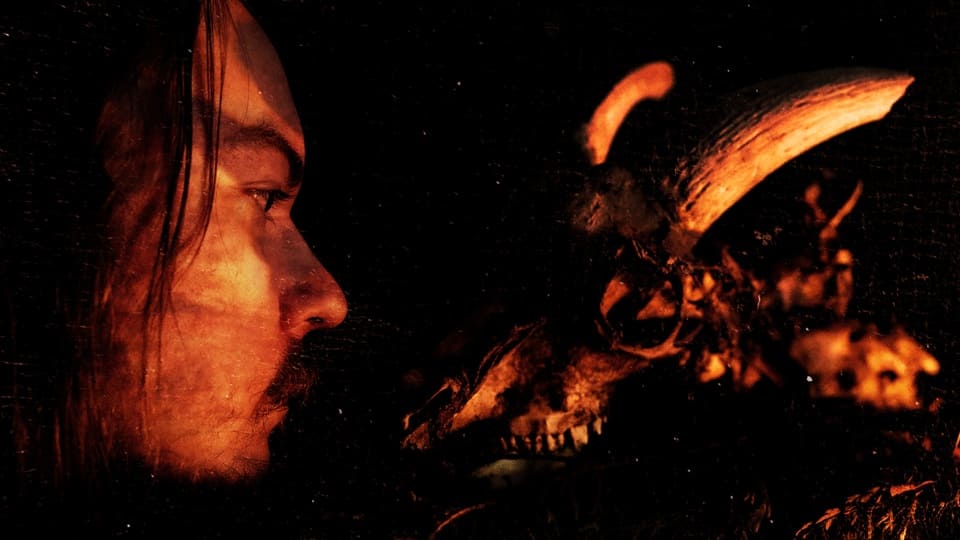
Director Tatu Heikkinen casts himself as the protagonist of this sleep-paralysis trance, moving through tight, hermetic spaces that suddenly crack open into boundless territory—the unmistakable geography of dreams. Brokenhearted and carrying the ashes of the woman he loved, he drifts through his days looking for meaning in a routine that has become the shape of his grief. And that’s about all the plot you get in a film that clearly prefers existing without one. What keeps its 72-minute running time alive is little more than a barrage of mind-bending imagery that feels like the unholy marriage of silent German expressionism and 1960s psychedelia—only rendered in stark monochrome. In truth, this plays less like a narrative than a sensory séance, loaded with symbolism and gestures toward life itself that seem designed to be felt rather than decoded. The Heikkinens start things off with a deceptively steady rhythm, but that stability doesn’t last long before a nerve-rattling whip pan tears it apart. The effect feels like a line being drawn across the film’s sense of space and time, almost ritualistic in how it shifts the experience from something faintly rational to something completely unhinged. Between grotesque angles, massive shadows, and gorgeously tactile practical effects, the film conjures a metaphysical force that seems bent on reshaping reality.
The atmosphere tightens until it becomes almost claustrophobic, which is exactly what a horror film about a man trapped inside his own darkness while grappling with the cosmic questions of life should feel like. The breathless tension created by the film’s mix of gleaming and grainy cinematography conjures despair through a sharply designed audiovisual framework. Some might say this is the stuff nightmares are made of, but to me it feels closer to the raw material real-life nightmares are made from.
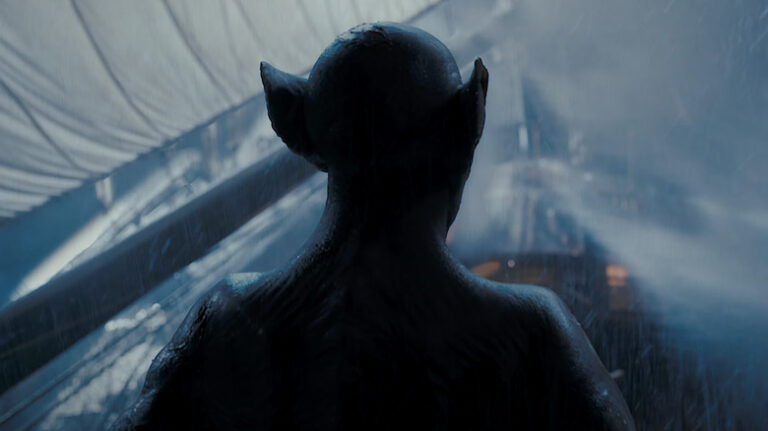
This isn’t the sort of film that bothers being easily digestible, even during its bursts of cinematic flair—like whenever that eerie hat-wearing figure shows up to dominate the frame. The abstractions rarely land in a place that feels rewarding or even fully lucid, which is exactly why the film seems more interested in flirting with the medium’s strangest tricks than in spelling anything out for the audience. Haunters of the Silence becomes a kind of intricate labyrinth with no real exit, a place that prefers to remain buried deep inside where our darkest fears quietly live. Thinking about it now feels oddly moving, but also deeply unsettling. Yes, it draws from folklore and touches on sleep disorders, but the real fascination lies in how those disorders manifest themselves, turning this risky yet creative indie effort into a bold experiment in cinema as dream logic.