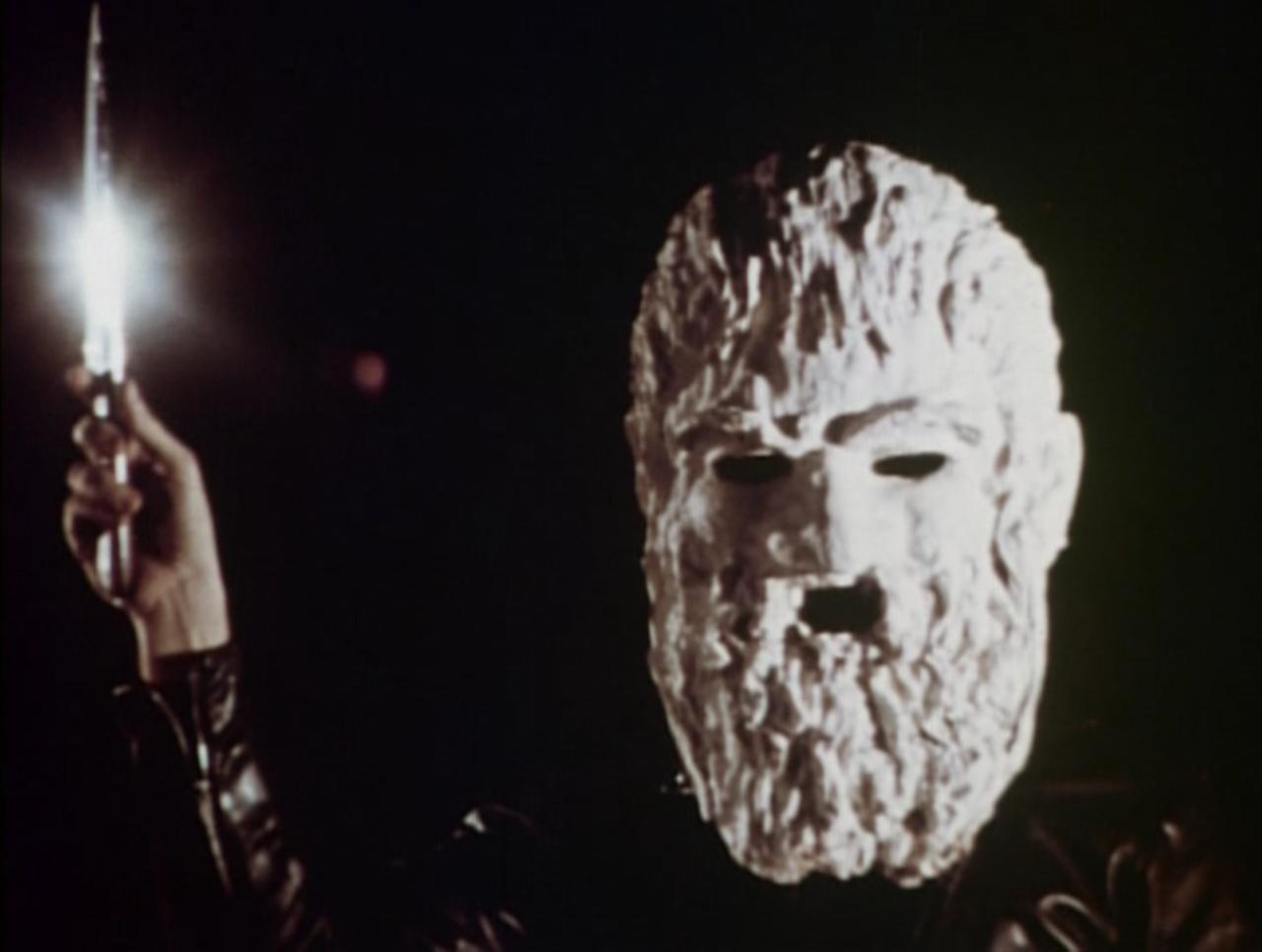
-Grindhouse Fest spotlights the cult gems, sleaze classics, and deranged wonders that defined exploitation cinema’s golden run. Proceed with delight and caution-
Directed by Roger Watkins
Written by Roger Watkins
Starring:
- Roger Watkins as Terry Hawkins (credited as Steven Morrison)
- Ken Fisher as Ken Hardy (Dennis Crawford)
- Bill Schlageter as Bill Drexel (Lawrence Bornman)
- Kathy Curtin as Kathy Hughes (Janet Sorley)
- Pat Canestro as Patricia Kuhn (Elaine Norcross)
Rating:
 I felt nothing but discomfort. The kind that settles in your gut and refuses to leave. I sat there dumbfounded as the film kept spewing its poisonous contempt for humanity, yet the deeper I sank into its filth, the more fascinated I became. That’s when it hit me: this wasn’t empty sleaze masquerading as profundity. Its corrosive misanthropy felt like the product of something deeply personal, as if every ugly image on the screen had been dredged from a wound that never quite healed.
NYC filmmaker Roger Watkins remains one of exploitation cinema’s most fascinating ghosts. His esoteric filmography and enigmatic sensibilities have turned his reputation into something closer to mythology than biography. Only a mind this elusive could have conjured this malevolent descent into sadistic porno, weaponizing one of exploitation cinema’s oldest and most scandalous urban legends: the snuff movie. Yet what truly makes Snuff so disturbing isn’t its supposedly illicit nature, but the mind-warping psycho-surrealism Watkins squeezes from that very myth.
Post-Manson America was drunk on liberation. Counterculture had gone mainstream, Hollywood was rewriting its own rules, and just about every corner of popular entertainment was eager to cash in on the decade’s freewheeling spirit. But liberation always leaves something ugly in its wake. The exploitation industry—especially horror—quickly discovered that nihilism, social anxiety, and pornography were just as marketable as sex and violence. Roger Watkins, however, wasn’t simply chasing another trend. I’m convinced he broke the mold by making an exploitation film that feels less like disposable grindhouse fodder and more like a dangerous emotional collapse preserved on celluloid.
Roger Watkins casts himself as Terry Hawkins, one of the most thoroughly repulsive creeps ever to slither through exploitation cinema. So here’s the deal. Sleazeball Terry Hawkins (played by Roger Watkins himself) comes out of prison with a monumental chip on his shoulder after serving time on a drug charge. Furious at society and convinced he got a raw deal, he decides to prove that if the world already sees him as a monster, he might as well become one. His grand answer? Start making snuff movies. To pull it off, he recruits two kinky dames and one spectacularly dim cameraman for the world’s most deranged film shoot.
The script is held together with duct tape and bad intentions, and the funny thing is that it couldn’t care less. Storytelling is the last thing on Watkins’ mind. This beast exists for one reason only: to rub your face in one grotesque snuff production after another. Terry barks orders, points the camera, screams, kills, rinse and repeat. That’s the movie. And somehow, that’s enough. This isn’t classy exploitation—it’s exploitation stripped naked, rolled in the gutter, and left there to rot. Watkins directs the whole thing like he’s staging the Apocalypse inside a condemned warehouse. There’s nothing sexy about the violence, nothing cool about it either. It’s damp, ugly, rancid stuff. The surviving cut barely lasts eighty minutes, yet it lands like a brick through a grindhouse marquee. The original three-hour version—The Cuckoo Clocks of Hell—has become exploitation folklore. Shame it’s gone. Then again, maybe that’s for the best. What survives is already more than enough proof that Roger Watkins wasn’t playing with a full deck. It’s exploitation stripped of almost every commercial instinct. There are no crowd-pleasing thrills here—only a filmmaker obsessively scraping away at humanity until nothing remains but bitterness and decay. Roger Watkins wasn’t simply another exploitation director. The man filmed like he had a personal vendetta against humanity itself.
Is Last House on Dead End Street a reprehensible movie? Hell if I’m the guy to answer that. Strip away the moral handwringing for a second and judge it strictly as exploitation cinema, and I’d argue it stands as one of the genre’s purest expressions. This isn’t just another sleazy programmer chasing cheap headlines; it’s a filmmaker coughing up every ounce of resentment, hatred, and disappointment he has toward the film business. Terry’s obsession with making snuff movies isn’t simply the plot—it becomes the physical embodiment of a man rejecting society with every fiber of his being. It doesn’t surprise me one bit that Watkins eventually drifted into hardcore pornography, an industry he openly resented yet somehow infected with a darkness few adult filmmakers ever dared approach. He probably shot those skin flicks because rent doesn’t pay itself, but somewhere between paycheck and bitterness he accidentally crafted some of the most artistically deranged pornos ever photographed. That’s why Watkins’ eventual migration into hardcore feels less like a career move than a continuation of the same psychological spiral. Ironically, the man ended up directing pornos almost allergic to eroticism. They pulse with the same despair, hostility, and emotional exhaustion that define his horror work. Watkins believed in cinema. He just didn’t believe in the people making it—including himself. That contempt bleeds from every off-kilter frame, every queasy edit, every ugly collision of sex, violence, and nightmare imagery. The cheap grain doesn’t weaken the experience—it makes the madness feel frighteningly authentic.
Watkins’ turn as Terry feels less like acting and more like some kind of public exorcism. Roger Watkins’ unnerving and deeply rancorous performance as Terry is something I doubt I’ll ever shake. His Terry isn’t simply evil—he’s rotten to the core. That maniacal laughter, those wild-eyed expressions, and the perverse delight he takes in transforming filmmaking into an instrument of destruction are nightmare fuel of the highest order. Decades later, the performance remains every bit as disturbing as the film surrounding it. A genuine exploitation masterpiece and, quite frankly, one of the scariest damn movies ever made.
*Quick note: The film was shot circa 1972–1973, yet remained unreleased until 1977.