Directed by Klaus Kinski
Written by Klaus Kinski
Starring:
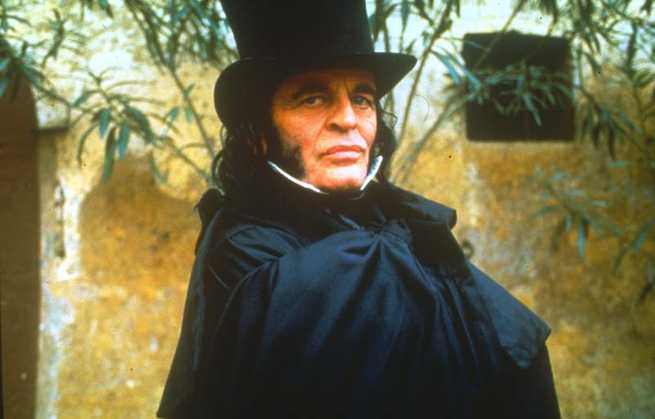
- Klaus Kinski as Niccolò Paganini
- Debora Caprioglio (credited as Debora Kinski) as Antonia Bianchi
- Nikolai Kinski as Achille Paganini
- Dalila Di Lazzaro as Helene von Feuerbach
- André Thorent as Galvano
- Eva Grimaldi as Maria Anna Elisa Bonaparte
Rating: 
Klaus Kinski’s fever-drenched, egomaniacal Paganini script—equal parts tawdry invention and incoherent self-mythologizing—was quickly branded unfilmable by Werner Herzog, the director originally tapped to rein it in. Trusting his instincts, Herzog walked away, leaving his so-called friend and perpetual foe to drown in his own delusions of grandeur.
Kinski, in a frenzy of self-authorship, wrote, directed, and edited this monument of delirium—a work steeped in narcissistic derangement and historical falsehoods, yet trembling with dark fascination. As Paganini, he does not so much play the violinist as exorcise himself, spiraling through a nonlinear dreamscape where debauchery is enshrined as art. This is the madness of a beast who, in his grotesque inventiveness, transmutes his infamous reputation into a mythic, almost infernal idolization of Paganini. One outraged judge captures the scandal: “He’s an animal! Given the chance he would rape every girl he meets, especially the ones underage!”.
True to form, Kinski rejoices in embodying the sexually profane; but knowing that he himself commands this deranged symphony of pornography, music, and vulgarity twists simple lust into a spectacle of intimate dread. Kinski turns his portrayal of Paganini into a masturbatory paean to his own persona—women worship him, swoon at the sight of him and there isn’t a single one who doesn’t want to sleep with him…even little girls adore him, gross I know, but keep in mind it’s a Kinski movie; also, Kinski awkwardly kisses and inappropriately fondles his 13-year-old son, Nikolai Kinski, who plays Paganini’s son. The aims of the film are transparent: a Kinski vehicle devoted to Kinski, gorging on his own hubris and sleaze. What is harder to parse is its attempt—if it can even be called that—to align radical formal experiment with a mystical, non-chronological impressionism that may or may not exist, depending on whether Kinski actually meant to provide it.
Paganini staggers across the screen with what might be called a baroque sensibility, though so twisted and distorted that it borders on parody. Kinski seems less interested in coherence than in spectacle, less in structure than in sheer provocation. And yet, for all its indulgence, the film emerges as a swirling marvel, a delirious cinematic accident whose very lack of control becomes its allure. No other actor-director would have dared such a leap: only Kinski could turn Paganini into a self-portrait of sin, excess, and ego. Watching him, one sees an artist intoxicated with himself—wallowing in his moral filth, transforming confession into exhibition, and then daring to justify it all through the infernal strains of Paganini’s music. It is a gesture of almost laughable arrogance, but also of strange courage, since he spares neither himself nor his audience.
And so the paradox: this is at once the most confounding debut film I have ever encountered and the only directorial effort Kinski would ever attempt. It is a mess, a jumble of conceits and pretensions, but unlike so many cinematic failures, this mess lingers, haunts, even provokes contemplation, precisely because it reveals the warped soul of its maker.