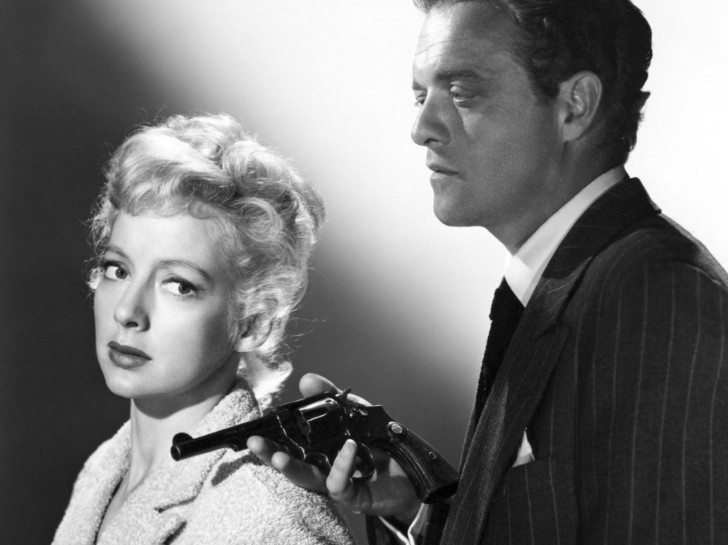
Directed by Joseph Losey
Written by Dalton Trumbo
Starring:
- Van Heflin as Webb Garwood
- Evelyn Keyes as Susan Gilvray
- John Maxwell as Bud Crocker
- Katherine Warren as Grace Crocker
- Emerson Treacy as William Gilvray
- Madge Blake as Martha Gilvray
Release Date: May 25, 1951
Rating: 
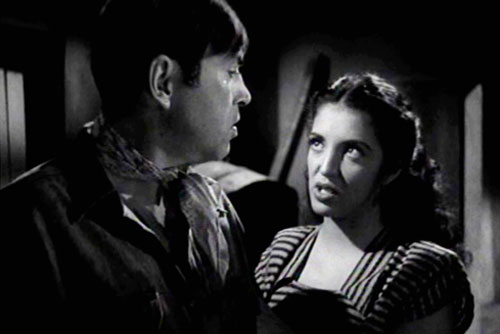
Joseph Losey’s nasty, bargain-bin riff on Double Indemnity is meaner, more brutal, and far less amused than Wilder’s sleek machine; it swaps the classic femme-fatale’s venomous allure for a vein of brute male sociopathy, abandons the original’s capitalist cynicism and acid misanthropy, and steers straight into leftist agitation. The Prowler operates as political praxis smuggled inside a grimy noir about Webb Garwood (Van Heflin), an envious, unethical cop—petty, resentful, and transparently self-loathing—who worms his way into an affair with Susan (Evelyn Keyes), the affluent married woman who summons the police after glimpsing a prowler lurking around her lavish home.
The illicit flirtation initially unfolds with the feverish intensity of a teenage romance—risqué yet essentially harmless so long as their meetings remain covert. But Losey’s noir is unwavering in its sociopolitical fatalism, and danger inevitably seeps in as the subversive charge of Webb and Susan’s toxic bond grows heavier. Dalton Trumbo’s clandestinely written script tears apart the cosmetic serenity of bourgeois domestic life and, through a surge of antagonistic social fury—embodied by Webb, a man devoured by his own vices and material hunger—contaminates the prudish facade of 1950s American conservatism, epitomized by Susan, herself trapped by class vanity and moral pretension. Their fraught romance culminates in the sordid murder of Susan’s husband. There is nothing playful in Trumbo’s gritty, embittered prose; it is a severe, frostbitten tale that mirrors Webb’s unnerving temperament, with Van Heflin delivering a superb portrait of a manipulative, predatory sleazeball.
This is one of those post-war noirs where the sheer scale of evil feels unquantifiable, yet its visceral power and startling psychological realism stem less from that ambiguity than from its Marxist illumination of the sordid events—events born from the eerie mirage of McCarthyite paranoia. Van Heflin’s Webb Garwood begins as a cop searching for a prowling intruder, only to become one himself, and ultimately morph into the very figure he once envied. The tragedy lies in the deterioration of his psyche: his moral compass grows so violently warped that his loftiest ambition becomes indistinguishable from his own ruin.