Directed by Ernest B. Schoedsack
Written by Ruth Rose (Story by Merian C. Cooper)
Starring:
- Terry Moore as Jill Young
- Ben Johnson as Gregg
- Robert Armstrong as Max O’Hara
- Frank McHugh as Windy
- Douglas Fowley as Jones
- Denis Green as Crawford
- Paul Guilfoyle as Smith
Release Date: July 27, 1949
Rating: 
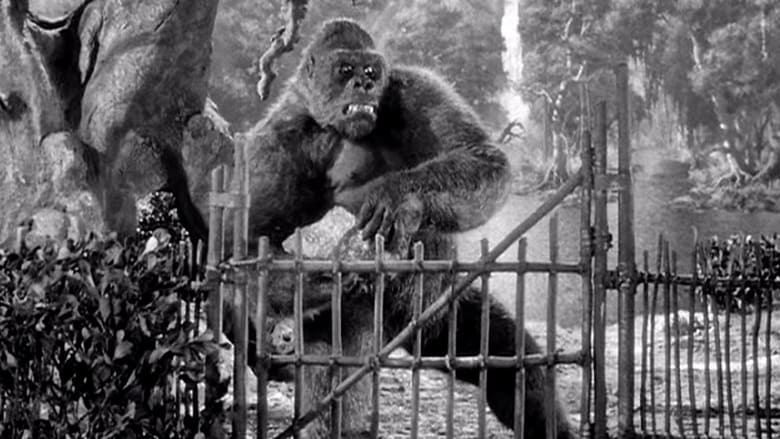
It lacks the revolutionary perfection of King Kong, yet mercifully avoids the hurried inelegance of Son of Kong. Mighty Joe Young stands on its own, possessing a self-contained grandeur that secures its place as solid entertainment. During Hollywood’s fascination with B-movie tales of gorillas unleashed upon the world, the legendary filmmakers behind the monumental 1933 classic returned to the genre with Mighty Joe Young, restoring its romantic, empathetic heart and reaffirming its cinematic promise. Though dismissed by audiences upon release, this thrilling 1949 film remains a triumphant display of practical effects, crafted by masters of the form. Terry Moore embodies the gentle and loyal friend of a formidable gorilla she adopted as a child in Africa, a bond that eventually carries her into Hollywood’s glamorous orbit, where Joe is put to work by an ambitious impresario staging extravagant nightclub spectacles. Robert Armstrong, intense and energetic as ever, delivers what feels like the crowning performance of his career, offering a fascinating meta-variation on Carl Denham—his earlier iconic role—reimagined here as a softened, redeemable figure marked by humor and wry self-awareness.
Under the mentorship of Willis O’Brien, a young Ray Harryhausen announces himself as a special-effects prodigy, animating Mighty Joe Young with astonishing precision and tactile grace in his first major technical assignment. While these effects clearly evolve from the innovations introduced in King Kong, their execution here is nothing short of dazzling. Joe’s interaction with rear projection is tightly composed, syncing action and spectacle with relentless momentum. Even when scale mismatches briefly surface between the gorilla and the miniatures, the storytelling flows so smoothly that the flaw barely matters. Ernest B. Schoedsack’s direction keeps the spectacle tightly reined in. Though the pacing slackens when the film drifts into overt moralizing, the action remains brisk and assured. As expected from Cooper and Schoedsack, the drama is familiar, but the imagery—rooted in vivid naturalism—achieves an almost ethnographic richness. King Kong may remain the genre’s ultimate tragic colossus, yet Mighty Joe Young, in its rousing stop-motion finale, rightfully claims its place among the great cinematic myths of the 1940s.